
Nella’s Editorial Conscience
The Other Black GirlNella’s effort to critique stereotyped representation is repeatedly redirected by colleagues, revealing how editorial judgment and career opportunity are shaped by power.
increasing Bearing strength in each event
 decreasing
Bearing strength in each eventdecreasingReading Shartricia
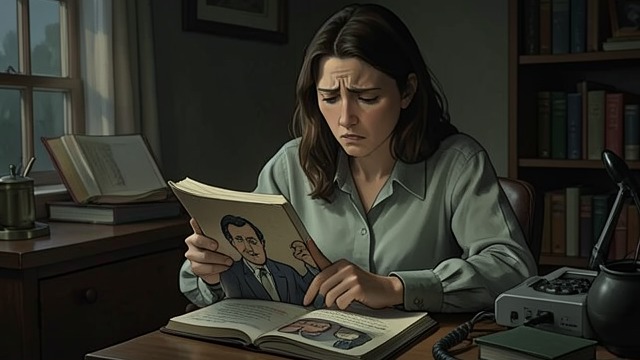
Reading Shartricia
A character assembled from clichés
Nella reads Needles and Pins and objects to Shartricia’s name, family circumstances, and voice. The character appears inserted to signal diversity rather than developed as a full person.
A difficult duty
Nella fears that speaking will mark her as accusing Colin of racism, but remaining silent would leave the stereotype unchallenged. Her response is grounded in editorial responsibility as well as personal recognition.
The manuscript makes representation a question of craft, power, and who is expected to absorb the harm.
The Meeting’s Framing

The Meeting’s Framing
Praise before critique
Vera praises Colin for adding diversity before Nella can present her concerns. The word frames Shartricia as a successful representational choice before the question of characterization can be examined.
Criticism recast as accusation
When Nella describes the character as a caricature, Colin focuses on whether she is calling him racist. The discussion shifts away from the writing and toward the author’s hurt.
The exchange shows how power can turn a critique of a book into a demand that the junior editor manage a senior writer’s feelings.
Marketing the Character

Marketing the Character
A public endorsement
Hazel tells the marketing meeting that Shartricia may connect with readers affected by addiction. Nella hears her colleague present a sympathetic account that avoids the sharper question of whether the character is well written.
Institutional approval
The room praises Hazel’s remarks, and Nella becomes the visible person associated with the criticism. Discussion of audience and sales further turns the character into a market category.
The meeting illustrates how representation can be celebrated as a selling point while criticism of its execution is sidelined.
A Caricature on the Cover

A Caricature on the Cover
The image returns
At the cover meeting, Leonard presents a design featuring fragmented faces, with Shartricia prominent among them. Nella sees the novel’s most troubling character translated into a sales image without context.
A loss of composure
Nella calls the work unbelievable, then tries to pass the outburst off as praise. The room moves on, leaving her alone with the realization that the cover makes the stereotype more visible.
The design sharpens her concern that commercial visibility is not the same as meaningful representation.
The Cost of Speaking

The Cost of Speaking
Recognition without authority
Nella’s colleagues begin asking Hazel for sensitivity reads and treating her as a promising voice, while Nella’s earlier critique has made her seem difficult. The difference is not simply who notices the problem, but who can speak without losing standing.
A decision deferred
Nella still believes Shartricia deserves better, yet her career hopes make her vulnerable to Wagner’s approval. She has to confront the gap between being morally right and having the power to shape the book.
The thread traces how institutional rewards can turn an ethical disagreement into professional isolation.
August 2018
August 28, 2018
September 26, 2018
October 20, 2018
Late October 2018
